Remeta
A vocabulary app I started building for myself. All seven languages I set out to cover are built now: English, French, Spanish, Italian and Modern Greek, alongside Latin and Ancient Greek.
This is my second attempt at building software around language. Enoda was the grammar half: what a form is doing in front of you. Remeta is the vocabulary half: the words you need in your head before any of that parsing is worth anything.
ῥῆμα, -ατος, τό [pl. ῥήματα]. That which is said, a word, an utterance. In Attic prose, often specifically a verb, as opposed to ὄνομα, a noun.
Condensed after Liddell & Scott. Remeta comes from ῥῆμα: I named it after what the feed is actually made of, words, one at a time.
- Words
- About 70,000, with definitions, examples and etymologies
- Languages
- 7, from Spanish to Ancient Greek
- Status
- In testing on iOS. Not yet tested on Android
- Privacy
- Study data stays on your phone. Signing in needs an account, and the social features need a connection. Nothing is sold or shared with advertisers
The problem
I noticed how much of my day was going into swiping through a feed built to hold my attention rather than reward it. The habit was already there, fully formed. Nothing about it was teaching me anything.
Why I built it
So I built Remeta to put a word behind that same swipe instead of whatever a feed had chosen for me. The habit stayed exactly the same. What came out of it changed. Words come with their meaning, an example sentence (for most) and their etymology, because that’s what actually makes a word stick in my head, not just a bare definition.
Who it’s for
Two kinds of learner. People who want to widen their vocabulary in a language they already speak, and people learning a new language who need the words before the grammar is any use. The same app serves both: a short level check estimates how large your vocabulary is, and the quizzes adjust to that estimate.
How it works
I swipe through words one at a time, save the ones worth keeping into lists, and try to keep a streak going most days. Quizzes are pulled from those same lists and get harder or easier depending on how I’m actually doing, so a word I get wrong comes back around later instead of just disappearing. The words and my lists live on the phone, so studying works offline once I’m signed in, and a backup is a plain file I export myself.
With friends
Remeta also has a social side. You can add friends by username, challenge them to a round (on accuracy, speed, mastered words or hard words), and share word lists to study together. A friend sees your score only after they have finished their own attempt. Friends can see your level, streak and number of mastered words once you choose a username, and the social features need a connection.
Screens
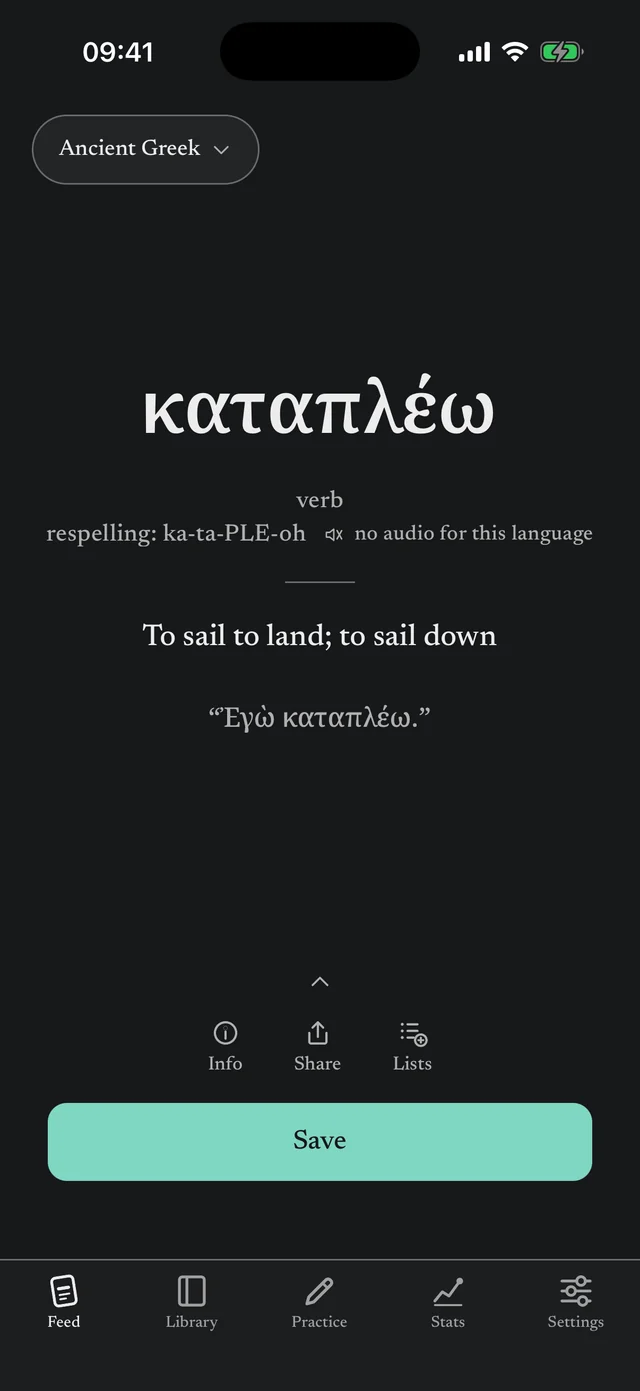
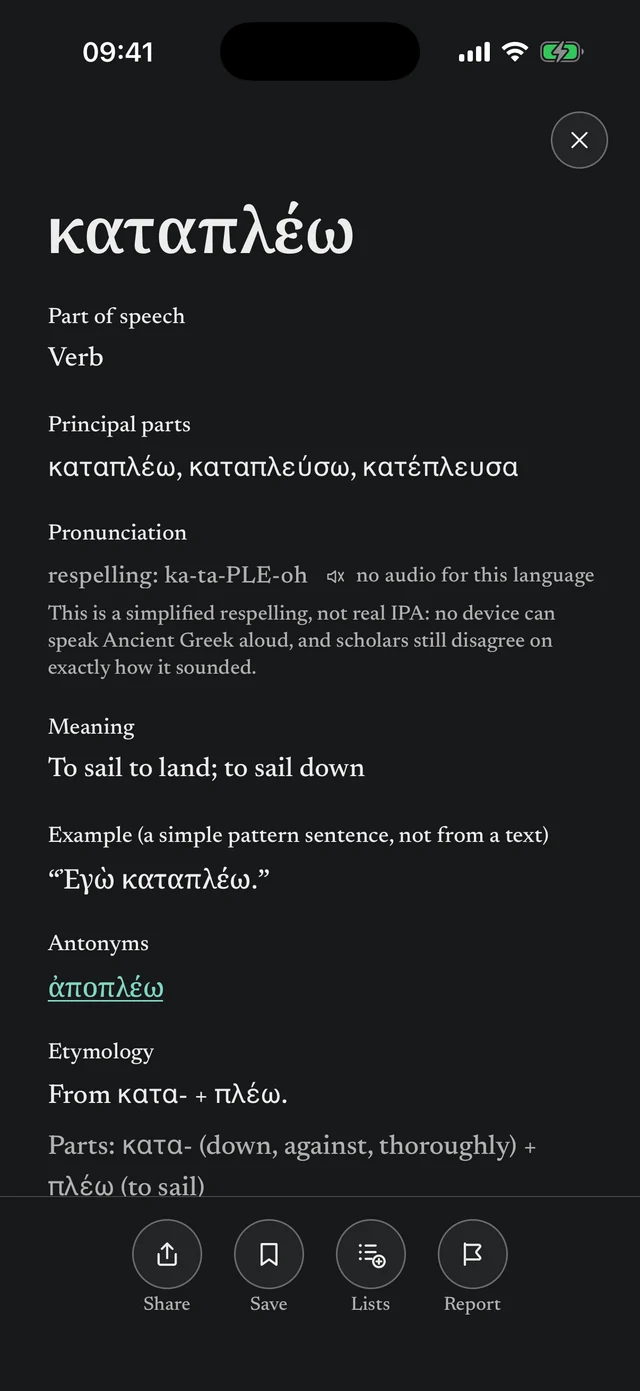
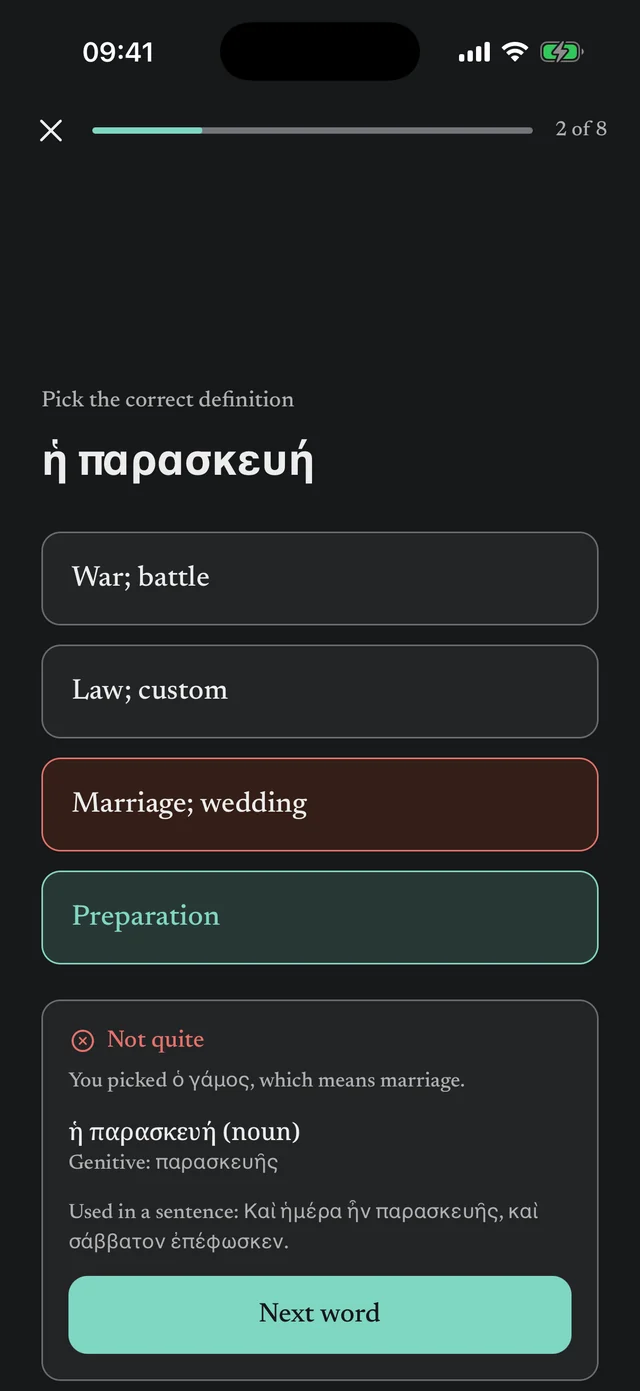
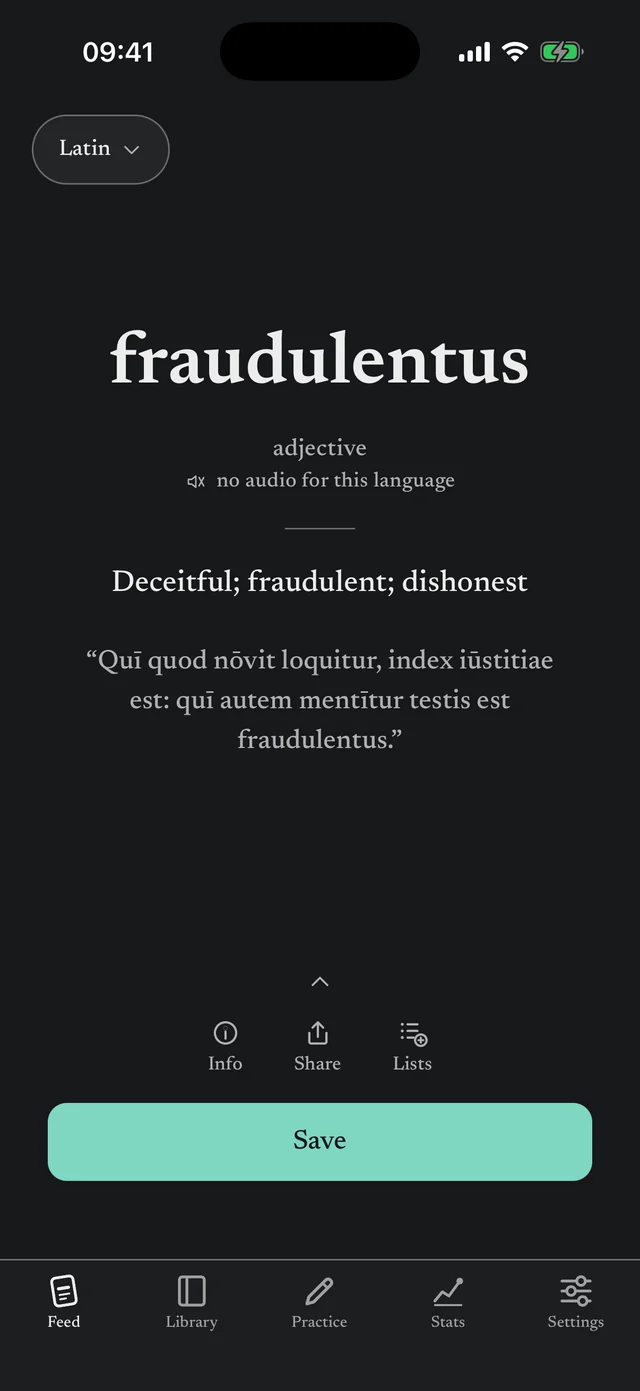
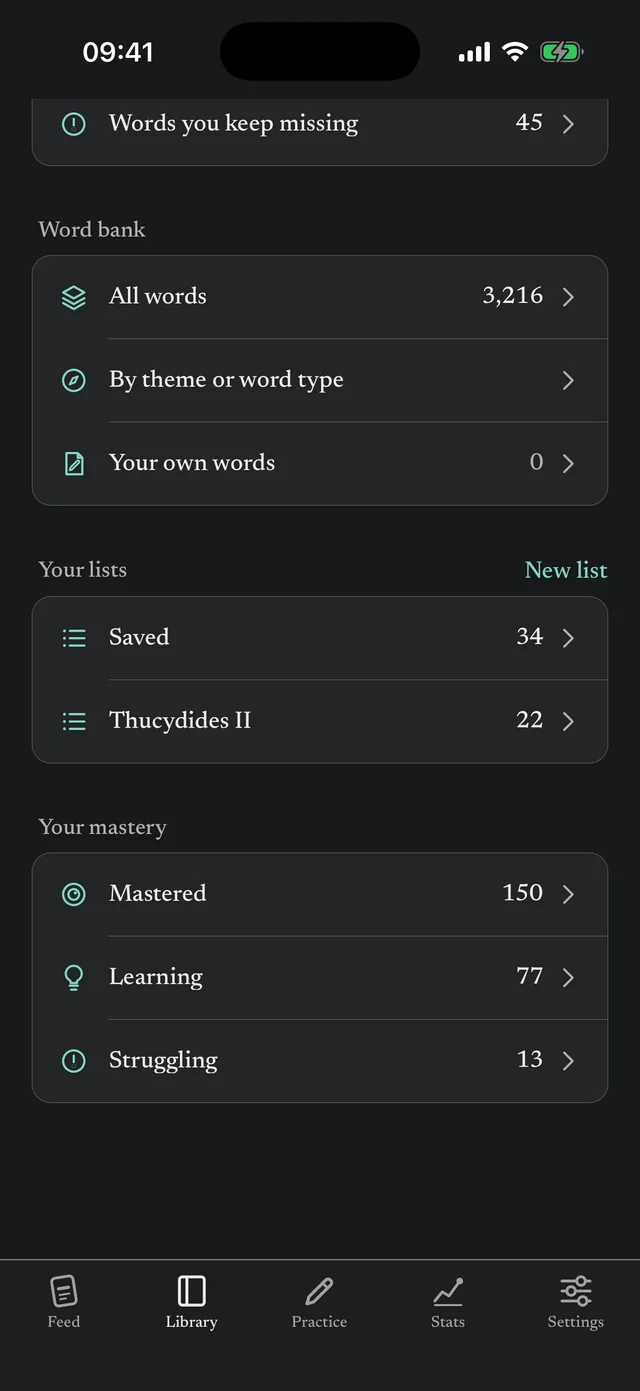
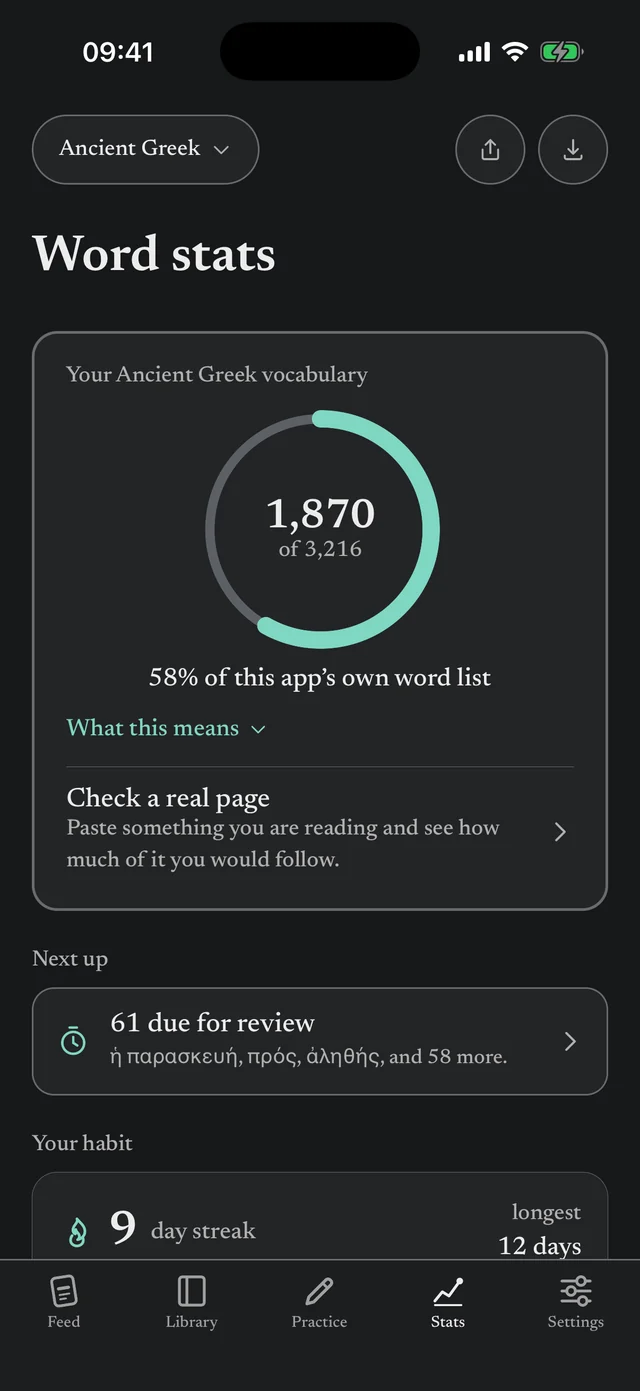
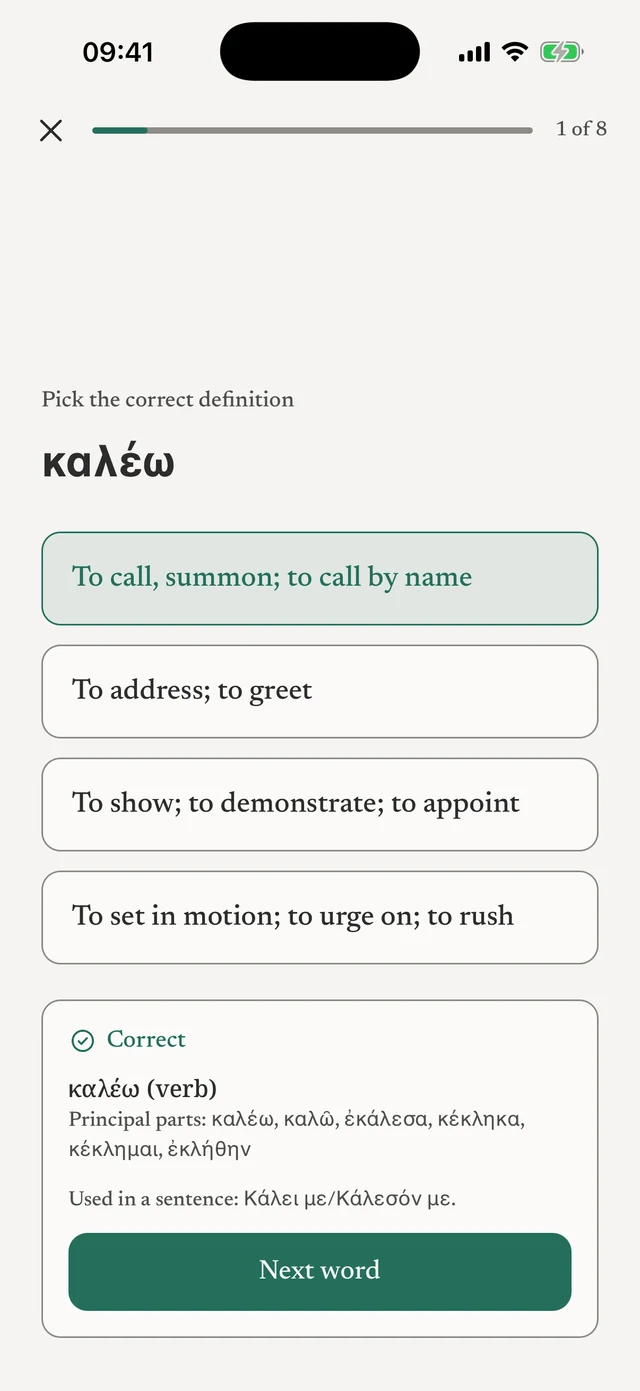
Screenshots show sample progress, not real usage.
Current status
All seven languages are built now, each with a genuine word bank rather than a stub: around 70,000 words in total, with definitions, example sentences and etymologies. The word banks are built by a data pipeline from sources including Wiktionary and WordNet, plus frequency data.
A few things I’m glad I got right along the way: a word like the Greek δημοκρατία doesn’t count as hard just because it’s rare, since an English speaker can already half-read it on sight, so the difficulty score adjusts for that; the quizzes build an actual running estimate of how many words I know, not just a streak count; and answering “I don’t know” counts as real information rather than a wrong guess, since a guess tells you less than honesty does.
I’ve been carrying it around and using it daily across every language I actually study, which is the only testing that has mattered so far. The one thing I haven’t done yet is check its estimate of my vocabulary against anyone whose real level I already know, so it’s a good-faith number, not a validated one. It is still in testing, on iOS only so far: I haven’t tested it on Android yet.
What’s next
The word banks and the engine are done; what’s left is testing it against real people instead of just my own numbers, and getting it in front of others instead of just me. Syncing between devices is built but on hold for now, since what I have is a one-way backup, not something that keeps two phones in step. After that: testing on Android, which the app is set up for but I haven’t tried yet, and getting it ready for the App Store.
When it is ready
There is nothing to install yet. All seven languages are built, but the app is still in testing, on iOS only so far, and there’s polishing left before it’s ready for the App Store. Leave your email for updates on Remeta, including when it gets there.
Thanks. You’re on the list.
Occasional updates only. Unsubscribe anytime.
Related
The grammar half of the same problem is Enoda, my Greek and Latin parser. Both come out of the reading: see the translations and the rest of the projects.